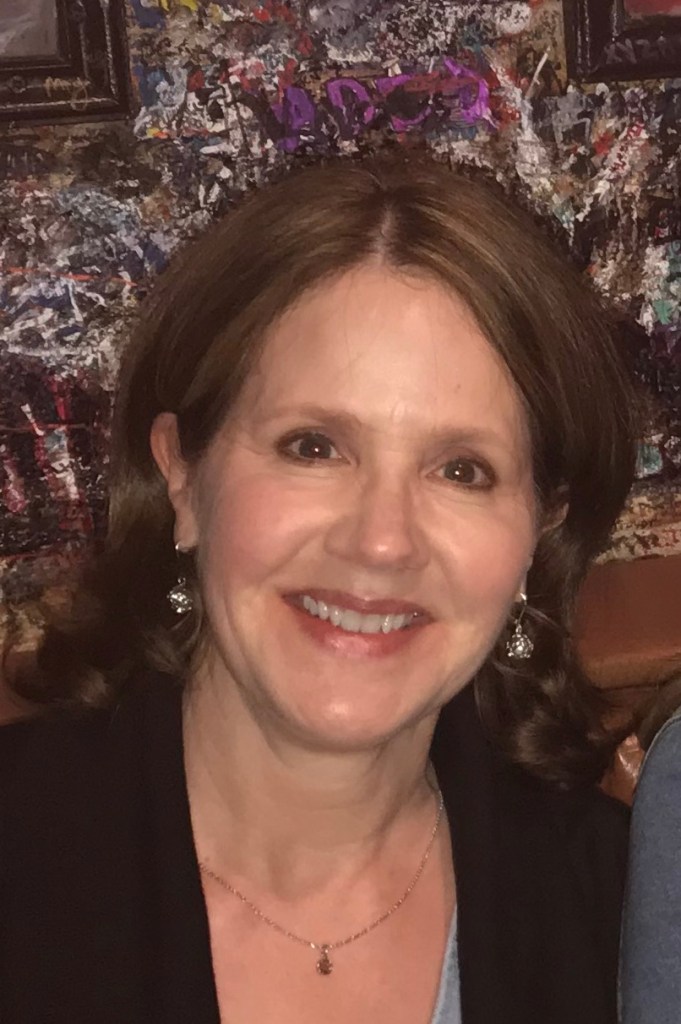
Ann Wachter is site editor, writer and poet.
I describe this website and my work in terms of a triskelion, a three-legged creature who inhabits my world. This includes my bio of professional accomplishments; my ambition to motivate others to action through the development and understanding of process and pedagogy; and my patrons whom I wish to engage in their enjoyment of the lifelong pursuit of uncovering the roots of art.
My Bio
I’m an educator, poet and author. I published my first poem, 9-11 Dream From a Steel Beam with Highland Park Poetry back in 2012; went on to publish poems about the first ladies of the United States with The Copperfield Review. In 2011, I self-published a fictional memoir titled Catharsis. My newest poetry project, Touch the Air, offers perspectives about life and aging in America. My vision is to debut an on-line art gallery, Anon Reads and Deeds Review, I fondly call ARDOR. It represents my passion for identifying hidden messages, the subtext of life as well as revealing the inner workings of today’s artists through their artistic lens.
My Ambition
Let me tell you a little about my artistic process and why it’s important to express it in terms of my ambitions for you, my audience. Each time I think about the thematic elements of written works, questions surface in my mind. Can the air make us feel? What drives me to wonder about this rather esoteric phenomenon? How can I best express my experiences? Poetry is my art and my passion. As I create, I consider each poem the equivalent of one painting or drawing or photograph or sculpture. Touching the air best describes my need to express what’s in my heart. I believe each person has the inherent ability to appreciate life and give all life surrounding them the gift of themselves relative to it and this is why we came to exist; unfortunately, not as innate as breathing the air. But, it would be great if we all saw the importance of that gift and sought to strive for it. As a gift, this implies kindness, respect, love, compassion and all things good. Although many of my poems come from sadness, fear, loneliness, confusion, it’s their juxtapositions which fleshes out relevancies. Many times, I just need to put our wrong world right. Call it a mini lecture from a rather older woman whose earned the right to lecture.
My Patrons
At Present: Bloggers who’d like to examine the subtext of a poem, an essay, short fiction or representational, abstract or nonrepresentational art. To kick this off, I’d like to share a poem from my collection and share the nuances of what makes it a finished work — these qualities include persona, form and content or syntax.
My poem titled Poetry Blues is an example of how to create a bluesy rhythm and was inspired by Calvin Forbes’ Talking Blues.
Poetry Blues
By Ann Wachter
Poem you woke me, you no saint
Your deft wit, split my nighty
Flick my skin like God Almighty
You lay on my pillow dent
Softly cooing ’til all’s spent
Your words lured Sophists to night’s purpose
When Gorgias asked me how and why
You responded with an “I”
Since, dear poem, you arrived unexpected
It was I who wrote words undetected
Poem let me see you
Thought I saw all your color
‘Til morning’s sun stung duller
You may think you’re accountable
But Hippias knows he’s bountiful
Poem let me hear you
May your rhythms lull all to sleep
So when words chime, all see deep
May I wake to sounds anew
So Poem, you redeem my dream, in you
Here, the rhythms are created by using short stanzas with end rhyme and it becomes a beckoning when I beg the poem to reveal itself through sight and sound. I also employ colloquial language. An example is the opening line: “Poem you woke me, you no saint.” The use of “you no” creates the persona of someone who is comfortable with identity (who is at home perhaps) expressing him/herself within a contextual dialectical social stratum. In this case, I want to give witness to a highly-educated persona of Black American decent; one intellectually grounded in poetry and Blues. The poem embodies an awakening both for the persona and figuratively to the power of inspiration, my ars poetica.
Feel free to comment about your interpretations of this work.
Subscribe
Sign up for a weekly newsletter with the latest blog posts and exclusive content. In your inbox every Tuesday!
Ann Wachter
Privacy
Terms & Conditions
 Ann Wachter Professional Practices Blog